
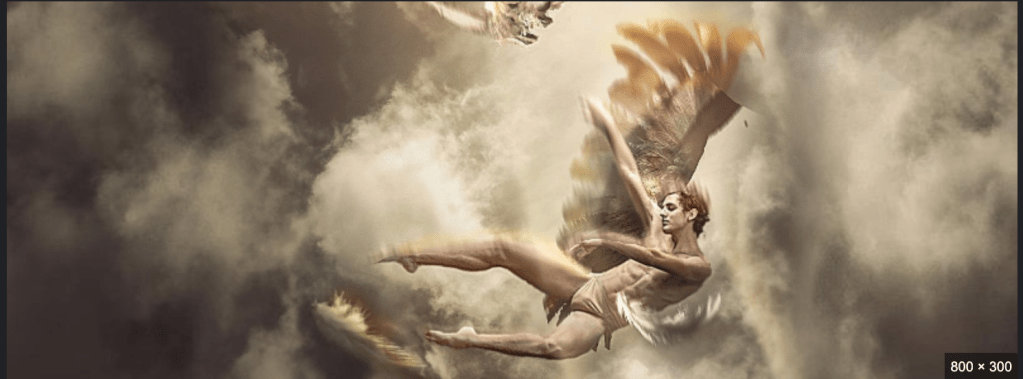
Consider what origin you had;
you were not created to live like brutes,
but to seek virtue and knowledge. (Inferno, XXVI, 188-120)
As mentioned elsewhere, I’ve dreamt about knowing things since I was a little girl. Knowing all things from why some plants are green to why time is infinite on the event horizon of a blackhole, to why some snakes are venomous and some aren’t, but why I am scared of them anyway.
Naturally, my curiosity took me to incredibly high highs and incredibly low lows. Now, we are looking at the collapse of a foundation established by beloved president, Jimmy Carter–I do believe that he is rolling in his grave. Perhaps the lowest low of them all.
Others who are rolling in their grave include Aristotle. Call me insane, but I think we would have been friends. Aristotle wrote a treatise on the role of education in the polis emphasizing that “education should be one and the same for all, and that it should be public” (Politics VII 17, 21-22). Similarly, the preservation of democracy hinges on the character of its citizens, after all, “the character of democracy crates democracy” (VII 17, 16). As a proponent for upholding the polis as a democracy, Aristotle truly believed that education is the pivotal point in a state’s liberty as it teeters on the edge of tyranny or oligarchy.
So, here we are at last. The turning point where the character of democracy creates democracy and the character of oligarchy creates oligarchy. And at this turning point, surely we have failed. And the question of how it came to be that we let such egregious and invasive acts happen can be answered in so many ways, but I will choose Keats and Newton for shits and giggles.
The discovery of the prism was pivotal for electromagnetic theory. The understanding of visible light led us to such great heights that essentially all modern electronics hinge on the reliability of one or more parts of the electromagnetic spectrum. Newton gave us the key to the future of warfare, communications, and exploration. And with all great discoveries comes a level of hatred that echoes through generations, sometimes even longer than the discovery itself. For example, the universe’s inception was coined by Fred Hoyle (a very influential astronomer, mind you) on BBC radio as a snarky response to where the field of physics was taking humanity in the 40s and 50s. Hoyle’s snarky remark is now what we colloquially use to describe the leading theory of the early universe, The Big Bang.
Newton’s public enemy #1 was poet John Keats. Newton’s discovery took place in 1666-ish. John Keats, 200 years later, in 1810, wrote Lamia as a response to the over-intellectualization of beauty. Essentially, Keats thought Newton’s discovery was a perversion of the rainbow’s beauty and of the natural world itself. Essentially, figuring out how something works does an unforgivable injustice to the once beautiful object. Newton ruined the rainbow.
Once again, science is under attack and though you may not have known the name of Keats’ poem, or even have known Keats himself, you certainly are aware of the tension between science, education, the public, and art. In college, I studied astrophysics and made friends with some artsier, more philosophically inclined peers. That I would even consider studying physics was beyond excuse. How this turned out is subject for a gin martini.
At odds for centuries now, science and the arts combat each other on a level that I do not fully understand. Luckily, Richard Dawkins wrote Unweaving the Rainbow and describes the tension much more eloquently than I can. He argues that learning how something works or the nature behind something does not make it less beautiful. From a scientist’s perspective it can actually make it more beautiful, but for the layman, the act of knowing how something works increases value and makes life more rich and fulfilling. It should be clear by now, but I take Dawkins’ side on this matter.
Keats poem influenced Edgar Allan Poe into writing a different poem titled To Science in which Poe exclaims “Science!…/Who alterest all things with thy peering eyes./Why preyest thou thus upon the poet’s heart.” While Keat’s poem was a bit more under the radar, Poe jumped into the deep end and his words reverberate throughout history as one of the most well-known and influential literary figures of all time. Further intensifying the tension between what is known and what should not be known. The generalized argument being that it is better to not know something for the sake of some abstract aesthetic value than have it ruined or perverted by the natural laws of science and discovery. The early roots of scientism, one of my least favorite -isms.
This brings us to the almost present. From Aristotle championing the idea of public education because the character of the polis’ citizens directly affects the outcome of the polis, to the battle between Newton and Keats, to the present when we have let the value of knowledge disintegrate. The appetite of wonder slipping further and further behind the veil of ignorance. And though I do not blame Keats and Poe singularly, I do believe that theirs and others’ influences should not go unnoticed.
Naturally, this is where you should ask, “what’s the point here?” Once again, I let Aristotle take the lead and will argue that this matters because our happiness depends on the availability of knowledge and the opportunity to learn. What the fuck else are we doing here as the most evolutionary evolved species on this planet?
Admittedly, it is hard to not be bitter or jaded about the outcome of recent events. I feel a certain personal responsibility to uphold whatever I can, but the reality of it is it’s a degradation to our species when we live like brutes and seek out only the pleasures because picking up a book is too difficult. Communicating via symbols as if we still live in caves. The derivation of pleasure is different and more base from the derivation of happiness, de facto. And yet, we have let pleasure trump all else because of the minds of people who have yet to discover the value and beauty of knowing for the sake of knowing.
If we look solely at the utility of the things around us, we end up in grayscale. Everything from street lamps to buildings become uninteresting existing solely because of the utility they provide. With our public institutions, if we look solely at the utility they provide, “we are left with a circularity. There must be some added value” (Dawkins, 5). “At least a part of life should be devoted to living that life, not just working to stop it ending” (5). I refuse to live in grayscale.
Finding value in the world around us includes the ability to see things beyond utility. Keats was wrong because he saw Newton’s discovery as one of pure utility. And though it brought enormous leaps in scientific discovery, Newton was plain curious. The utility of a prism or rainbow may have been lost on him at least for some time, but the knowledge of the rainbow exiting a prism was a moment of ecstasy. I know this because I have felt similarly (though I have not created any notable scientific discoveries). For what it’s worth, Keats was also in the business of discovery and unearthing the unknown. He did it with prose and poetry, some good, some bad, and some long lasting, but he worked to understand just as much as Newton did. And similar to how he criticized Newton 200 years later, so I am too, 200 years later.
Take that, Keats.
 Wolf Den Books
Leave a reply to On Finding Value Outside of Utility – Wolf Den Books Cancel reply